The Role of Quality Standards in Food Supply Chains
Quality standards in food supply chains are not technical formalities. They are what makes it possible for a bakery in Muscat to trust the flour it receives, for a farmer to rely on the feed that supports his livestock, and for a household to open a product with confidence. They are the operational foundation that separates a reliable food system from a fragile one.
This article explains what those standards are, why they matter at every stage of the supply chain, and how companies like Atyab Group apply them to ensure consistent quality across flour milling and animal feed production in Oman.
What Quality Standards Actually Mean in a Food Context
Quality standards in food production are documented frameworks that define how food must be handled, processed, tested, and delivered at every point in the supply chain. They exist to ensure that what leaves a production facility is safe, consistent, and fit for its intended purpose.
The two most widely adopted frameworks globally are:
ISO 22000: an internationally recognised Food Safety Management System standard that applies to all organisations within the food chain, from farmers and processors to distributors and retailers. It incorporates Hazard Analysis and Critical Control Points (HACCP) principles and requires systematic identification and control of food safety risks.
HACCP: a science-based approach that identifies biological, chemical, and physical hazards in the production process and establishes controls at critical points to prevent contamination before it occurs.
Together, these frameworks form the backbone of responsible food production. As of 2022, over 51,500 sites globally were certified under ISO 22000, reflecting the standard's adoption as the baseline expectation for serious food supply chain operators.
Source: ISO Survey 2022, International Organization for Standardization
Why Standards Matter at Every Stage of the Supply Chain
A food supply chain is only as strong as its weakest point. A product may begin with quality raw materials but arrive at the consumer in poor condition if any stage from processing, to packaging, storage, or distribution fails to meet the required standard. Quality standards create the continuity that prevents this.
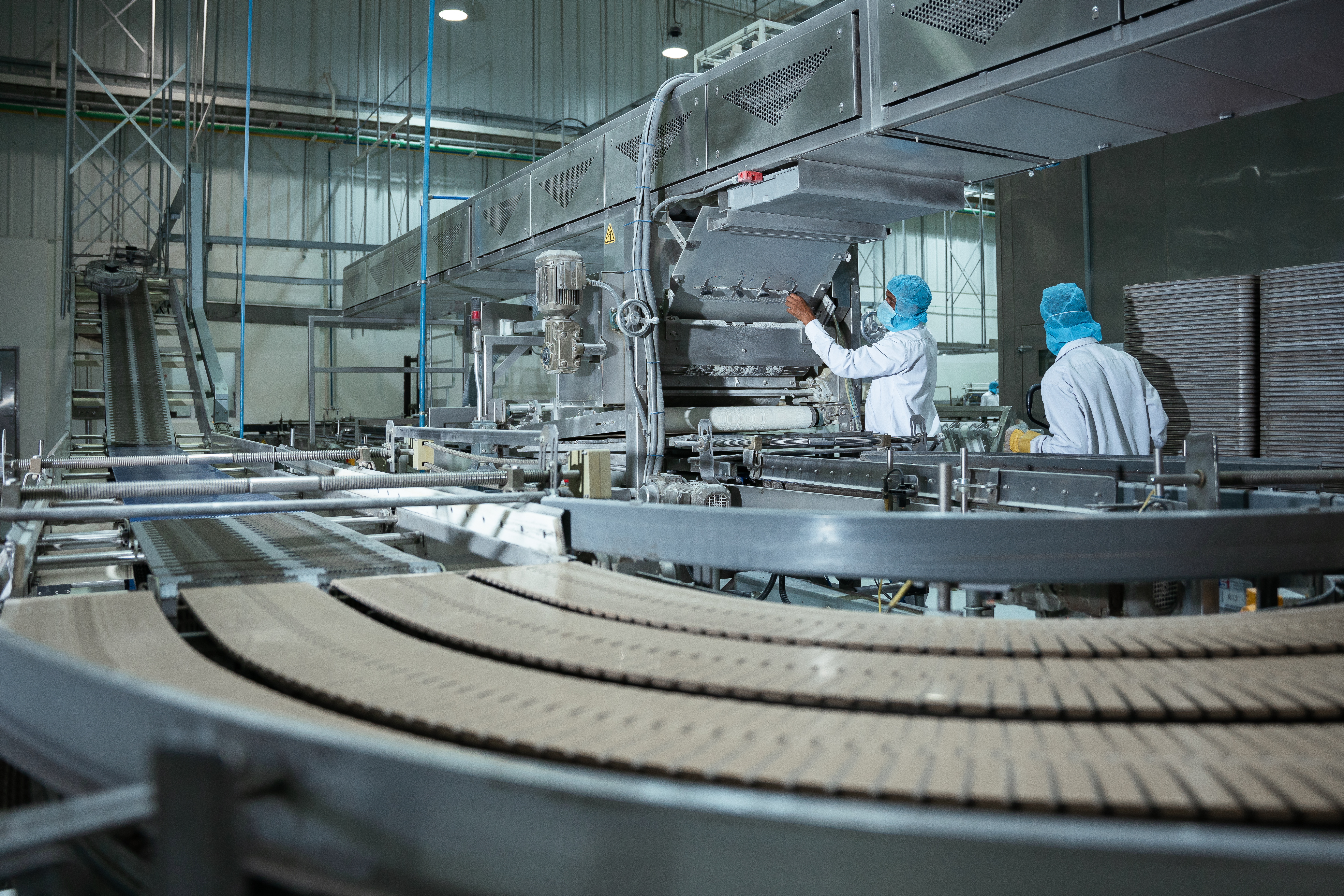
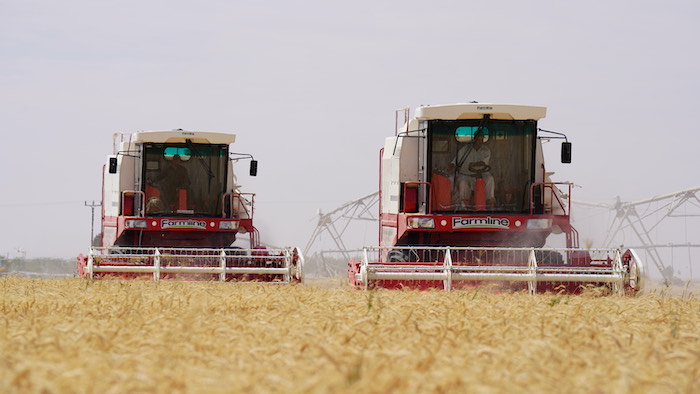
For flour milling, this means that wheat sourced from international markets must meet defined protein content and moisture specifications before milling begins. The milling process itself must operate within established parameters for temperature, particle size, and contamination control. The output is then tested against performance standards before it leaves the facility.
In January 2026, a new international standard, ISO 5530-1:2026, was published specifically for wheat flour quality assessment, standardising the testing of water absorption and rheological properties of dough. This directly affects how flour mills and bakeries certify consistency across supply chains, particularly for export documentation and procurement contracts.
Source: ISO 5530-1:2026, International Organization for Standardization, January 2026
For animal feed, quality standards govern ingredient sourcing, nutritional composition, contamination limits, and labelling accuracy. Livestock performance is directly dependent on the consistency of the feed they receive. A variation in protein or energy content across batches can affect animal growth rates, output quality, and ultimately the food products that reach consumers further down the chain.
Quality Standards as a Supply Chain Resilience Tool
Quality standards do more than protect individual products. They build the structural reliability that supply chains depend on, particularly in regions with high import dependency. Oman ranked 42nd globally in the Quality and Safety dimension of the Global Food Security Index, with a score of 73.2 out of 100. Within the Arab region, Oman maintained its position as the third highest ranked country in food safety and quality. The country's food safety regulatory framework has been progressively strengthened, and in 2024 Oman unified its food and fisheries investment portfolios to sharpen decision-making and eliminate duplication of resources in a move that directly improves the coordination of quality standards across the food system.
Source: Zawya / Global Food Security Index 2022–2023; Oman Observer, August 2025
For importers, buyers, and distribution partners, a certified food supplier reduces risk. ISO 22000 or HACCP certification signals that the supplier has documented controls, conducts regular audits, and maintains traceable records, which means that in the event of a product issue, the source can be identified and isolated quickly. This is particularly important in GCC markets, where food shipping costs can be volatile and supply chain disruptions are costly.
Source: Milling MEA / Marmore Research, 2023
What Quality Standards Mean for Bakeries, Food Manufacturers, and Retailers
For businesses that purchase flour or feed as production inputs, quality standards have direct operational implications. Inconsistent flour performance (variation in water absorption, protein content, or moisture) creates unpredictable results in the bakery or food manufacturing environment. This drives up waste, increases batch rejection rates, and creates pressure on production planning.
Consistent quality, underpinned by documented standards and regular testing, means:
Predictable production outcomes and reduced batch variability
Lower waste and rework costs across the production line
Confidence in supplier compliance for audit and certification purposes
Stability in contract terms, as quality specifications are defined and verifiable
For retailers and food service operators, supplier quality certification is increasingly a procurement prerequisite. Retail chains across the GCC region are embedding quality standard requirements into their supplier agreements, making certification not just a best practice but a commercial necessity for market access.
How Quality Standards Are Applied Across Atyab Group's Operations
Atyab Group operates across flour milling and animal feed production, both of which are subject to rigorous quality control requirements at every stage of the production process.
Across Atyab Group's flour operations, raw wheat is assessed upon arrival against defined specifications before entering the milling process. Milling parameters are controlled and monitored to ensure output consistency. Finished flour products are tested against quality benchmarks before dispatch, ensuring that every batch delivered to bakeries, food manufacturers, and households meets the expected standard.
Across the animal feed range, ingredient sourcing follows defined nutritional and safety criteria. Feed formulations are developed to meet established performance benchmarks for the livestock categories they serve. Production and packaging processes are controlled to prevent contamination and maintain the integrity of nutritional specifications.
Both operations reflect the same underlying commitment: that quality is not managed at the end of the process but built into it at every stage.
Quality Standards for Producers, Buyers, and Consumers
Quality standards in a food supply chain affect everyone who interacts with that chain, though each group experiences them differently.
For producers, quality standards define how to operate. They provide the documentation, controls, and testing protocols that ensure output consistency and create the audit trail required for certification, export, and commercial contracting.
For buyers and distribution partners, quality standards are a procurement filter. They reduce supplier risk, simplify compliance auditing, and provide assurance that what is ordered is what will arrive, at the specification agreed.
For consumers, quality standards are invisible but essential. They are the reason a bag of flour performs consistently in the kitchen, that animal products from certified farms meet safety expectations, and that branded food products deliver the same experience batch after batch.
The discipline that quality standards impose on producers creates the reliability that buyers depend on and the consistency that consumers expect. Each layer reinforces the others.